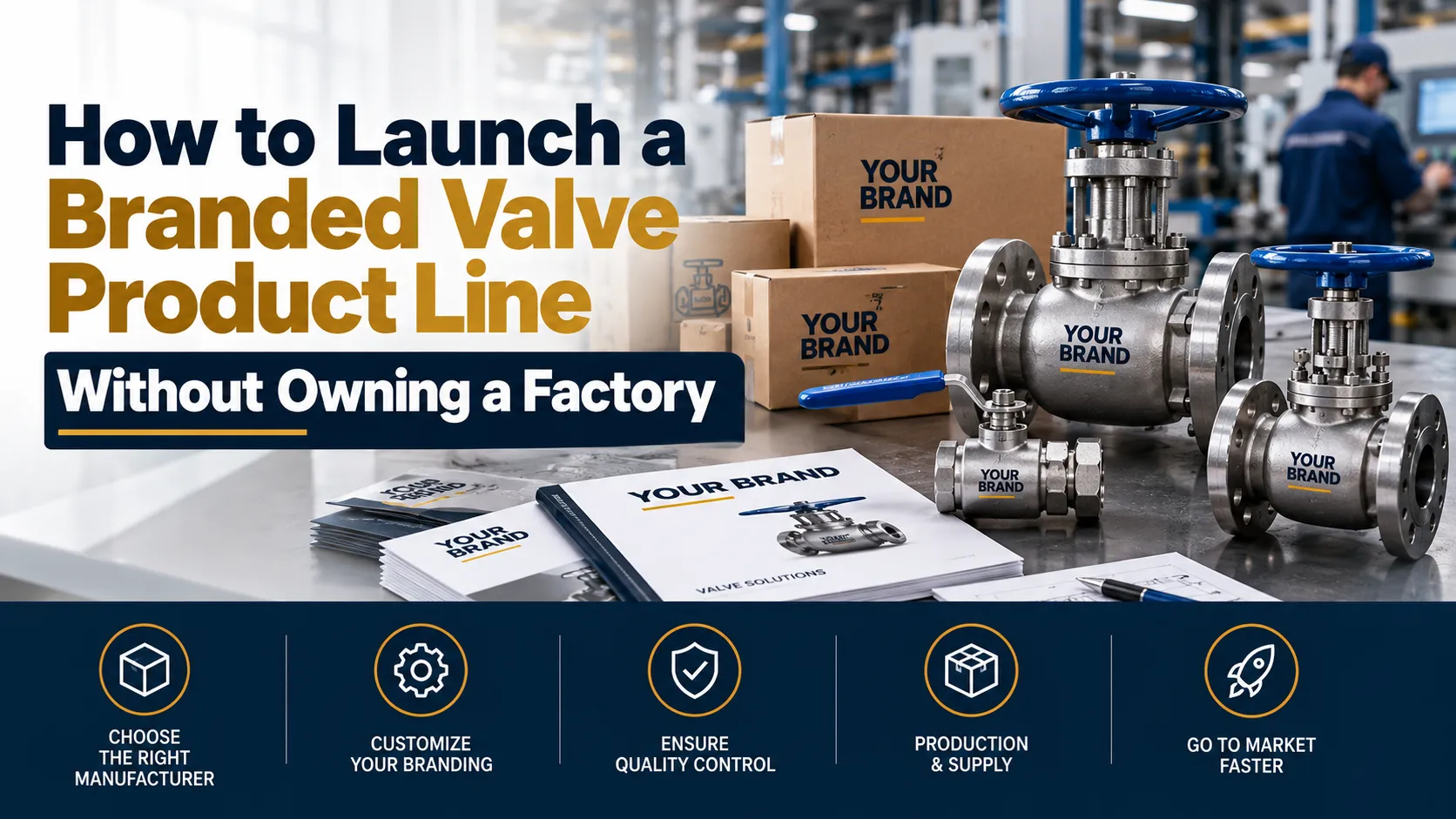
Building a valve brand used to mean building a factory first tooling, machining, quality systems, and years of capital tied up before you sold a single unit. That's no longer the only path. Private labeling lets you launch a branded valve product line by partnering with an established manufacturer, applying your branding to proven designs, and going to market in a fraction of the time. This guide walks through how the model actually works, what decisions matter most, and where the common mistakes happen.
Private Label vs White Label vs OEM: What's Actually Different
These terms get used interchangeably, but they describe different arrangements — and getting the distinction wrong can lead to a quote that doesn't match what you actually wanted.
White label means the manufacturer already has a standard product line, and you're simply applying your brand to it. A white label valve supplier sells the same base design to multiple brands; the only thing that changes is the label and packaging.
Private label is closer to exclusivity a design manufactured specifically for your brand, based on your specifications, even if it's built on the manufacturer's existing platform. You're not necessarily changing the engineering, but the arrangement (and often the tooling) is set up for you specifically.
OEM (Original Equipment Manufacturer) goes a step further: the manufacturer builds to your specification from the ground up, which may include custom design, materials, or configurations that don't exist in their standard catalogue. This is the route for OEM valve rebranding where the underlying product itself needs to differ from what's already on the shelf.
Most companies looking to launch a branded valve product line start with white label or private label lower cost, faster to market and move toward a more OEM-style relationship only once volume and differentiation justify it.
Why You Don't Need to Own a Factory to Launch a Branded Valve Line
The capital case against building your own manufacturing is straightforward: machining equipment, tooling, quality certifications, and skilled labor represent a multi-year investment before you've sold anything. A private label valve manufacturer has already made that investment in equipment, certifications, and process controls and spreads that cost across many brand partners.
What you're actually buying isn't just a product with your logo on it. You're buying access to manufacturing capacity, established quality systems, and supply chain relationships that would otherwise take years to build. For most companies entering the valve market distributors expanding into their own brand, engineering firms wanting a proprietary product line, or established brands extending into new categories that trade-off heavily favors partnering over building.
What Can Actually Carry Your Brand and What Requires New Tooling
This is the distinction that trips up first-time private label buyers most often. Not everything you might want to customize is a "print job."
Print-level customization the fast, low-cost tier includes:
- Your brand name and logo on the valve body or handle
- Custom packaging, boxes, and labeling
- Color options within the manufacturer's existing range
- Your part numbering system replacing the manufacturer's own
Tooling-level customization a bigger commitment includes:
- A modified valve geometry or configuration that doesn't exist in the standard line
- New materials not part of the standard offering
- Custom dimensions or connection types
The practical lesson: when you request a quote, be explicit about which tier you're asking for. A supplier quoting "private label" pricing based on print-level work will come back with very different numbers than one pricing a tooling project — and that mismatch is one of the most common sources of delay and budget surprises in this process.
The Private Labeling Process, Step by Step
- Define your product scope. Which valve types, sizes, and configurations will carry your brand? Start focused rather than trying to private label an entire catalogue on day one.
- Confirm print-level vs tooling-level needs. Decide early whether standard products with your branding will work, or whether the application requires custom geometry or materials.
- Branding and packaging development. Logo placement, part numbering, packaging design, and any documentation (datasheets, certificates) that will carry your brand.
- Quality assurance and product inspection. Every private label run should be checked against your specifications before it ships not just the manufacturer's own standard.
- Production and supplier coordination. Managing the manufacturing relationship, timelines, and communication so the process runs smoothly without you needing a factory floor presence.
- Market launch and ongoing support. Once product ships, the relationship continues reordering, quality feedback, and expanding the product line as demand grows.
Quality Control: The Non-Negotiable Step Before Your Brand Goes On
Once your name is on the product, quality problems become your problem not the manufacturer's, in your customer's eyes. This is the part of private labeling that's easiest to underinvest in, because it doesn't show up in a sample unit the way branding and packaging do.
A private label valve manufacturer worth working with should be running product inspection and quality assurance as standard practice, not an optional add-on you have to request. That includes checking materials, dimensions, pressure ratings, and finish against your specification not just the manufacturer's own baseline standard before anything ships under your brand.
Why a Branded Product Line Builds Long-Term Value
Beyond the immediate margin improvement of selling under your own brand, private labeling changes the customer relationship. When a component needs replacement or repair, a customer holding a product with your part number and your brand comes back to you not to whoever else might supply the same generic part. That repeat-business dynamic is a large part of why established brands across pneumatic, hydraulic, and industrial valve categories have leaned into private labeling for years: it converts a one-time transaction into an ongoing relationship anchored to your brand.
Common Mistakes When Launching a Private Label Valve Brand
- Treating every request as print-level when it actually needs tooling leading to quote surprises and timeline delays.
- Skipping quality inspection because the manufacturer's standard product already "works" without verifying it meets your specific application and brand promise.
- Starting too broad, trying to private label an entire catalogue before proving demand on a focused product range.
- Underestimating supplier coordination someone on your side needs to own the relationship, timelines, and communication, even without an in-house factory.
- No plan for scaling private labeling that works at low volume can hit friction at higher volume if production capacity and lead times weren't discussed upfront.
How PVF Engineering Supports Your Private Label Launch
This entire process is exactly what our private labeling support service is built around — customized product branding, private label packaging support, quality assurance and product inspection, supplier coordination and production management, and ongoing brand and market support as your product line grows. If you're weighing whether your application needs print-level branding or a tooling-level custom design, that's a conversation worth having before you request quotes, not after. Our private labeling support team can scope that distinction for you and manage sourcing, quality, and packaging coordination from there.
Final Thoughts
You don't need a factory to launch a branded valve product line you need the right manufacturing partner, a clear scope of what's print-level versus tooling-level, and quality control that's checked against your specification, not just theirs. Start focused, get the branding and quality process right on a narrow product range, and scale from there once demand proves the model out.
FAQ About launch a branded valve product line
How much does it cost to private label valves under my own brand?
Cost depends heavily on whether your requirements are print-level (branding, packaging, part numbers on existing products) or tooling-level (custom geometry or materials requiring new tooling). Print-level private labeling is typically far more affordable and faster to launch; tooling projects require more upfront investment but deliver a differentiated product.
What's the minimum order quantity for a private label valve program?
Minimums vary by manufacturer and product complexity. Many private label programs accommodate smaller initial volumes to prove out a product line before scaling, though tooling-level custom designs often carry higher minimums to justify the tooling investment.
Can I private label valves without any engineering background? Yes. A private label valve manufacturer or partner handles the engineering, quality assurance, and production side your role is defining product scope, branding, and market positioning. That said, having someone review technical specifications on your behalf helps avoid mismatched expectations.
How do I know if I need private label, white label, or full OEM development?
If an existing standard product meets your application, white label or private label branding on that product is the faster, lower-cost route. If your application needs something that doesn't exist in any manufacturer's standard catalogue different materials, geometry, or performance specs that points toward OEM valve rebranding with custom development.
Can I launch a private label valve brand if I'm based in Alberta but sourcing from overseas manufacturers?
Yes. Many Alberta-based brands source through private label or OEM manufacturing relationships regardless of where production happens the key is having quality assurance and supplier coordination on your side of that relationship, which doesn't require a local factory.
Do private label valves sold in Alberta still need CRN registration?
Yes. Private labeling changes the branding, not the regulatory requirement pressure equipment sold for installation in Alberta still needs ABSA CRN approval regardless of whose name is on it. It's worth scoping CRN requirements alongside your private label product plan from the start.
Can a private label valve product line serve Alberta's oil & gas sector specifically?
Yes. Private label and white label valve programs regularly supply products rated for oil & gas service conditions sour gas resistance, high pressure, cold climate materials as long as those requirements are specified upfront rather than assumed.
Do I need a local Alberta office to run a private label valve brand?
No. Many successful private label programs are run by companies with no physical manufacturing or office presence in the province, coordinating sourcing, quality, and logistics remotely while selling into Alberta and across Canada.